
“If men define situations as real, they are real in their consequences.” — W.I. Thomas and Dorothy Swaine Thomas
WORTH KNOWING TODAY
Spirituality calls it manifestation. Sociology calls it the Thomas theorem. Psychology calls it expectation.
The idea is not that thoughts magically control reality. It is that what you believe changes how you interpret the world, what you notice, what you attempt, what you avoid, and how other people experience you. A belief can begin as an inner assumption and become real through the behavior it organizes.
Placebo and nocebo research show that expectation can change pain, stress, symptom perception, and the body’s response to treatment. Predictive processing points to the same pattern: your brain does not passively receive reality. It guesses first, then uses the world to update the guess.
Ancient traditions gave enormous weight to this. The Gospel of John begins with the Word. Hindu thought treats Om as the sacred sound through which reality is ordered. The Stoics taught that we are disturbed less by events themselves than by the judgments we place on them.
What you believe shapes what you notice. What you notice shapes what you do. What you do shapes who you are.
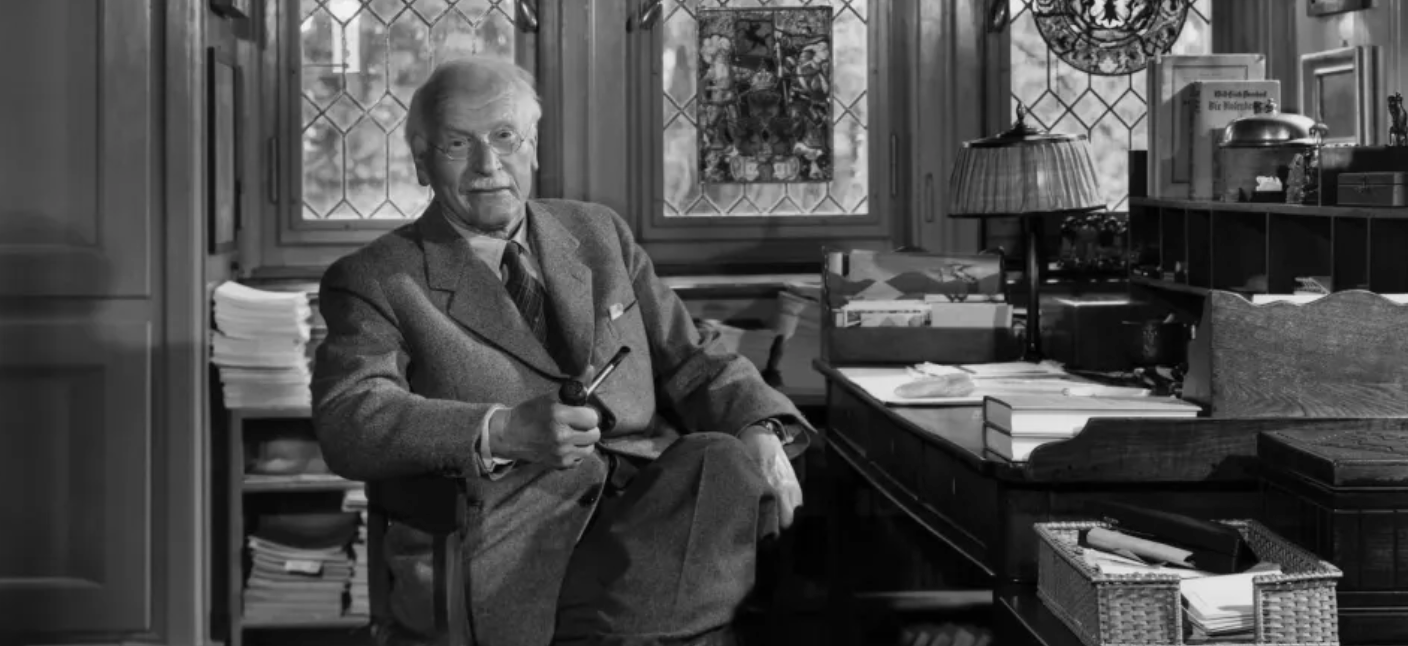
“The psychological rule says that when an inner situation is not made conscious, it happens outside, as fate.”
Jung is pointing to something painfully practical: what you refuse to notice inwardly often gets acted out outwardly. A fear of rejection becomes silence. Silence becomes distance. Distance becomes loneliness. Then loneliness starts to feel like fate. But it was not fate. It was a belief, moving quietly through attention, interpretation, and behavior until the outside world began to match the inside pattern.
TODAY'S ANCHOR
Peace — Before trying to change your mood, find the sentence underneath it. “I’m behind.” “They don’t like me.” “Nothing ever works out.” Try renaming it gently: “I am having the thought that...” Peace begins when the story becomes something you can observe, not something you automatically obey.
Stability — Pick one belief to make real today. Keep it small enough to prove. “I am someone who follows through on little things.” Then give it one piece of evidence: take the walk, send the message, start the project. Belief becomes stronger when the body participates.
Expression — Write one sentence you want to live from today. “I can begin before I feel ready.” “I do not have to turn fear into avoidance.” “I can be tired and still be kind.” Say it out loud. Words become more powerful when they leave the mind and enter the world.
REFLECTION
What pattern in my life might be less “fate” than a belief I keep rehearsing?
WILDCARD
For one day, ban dramatic identity sentences. No “I’m cooked,” “I’m lazy,” or “I can’t.” Say the precise version instead: “I’m tired.” “I avoided this.” “I made one mistake.” “I need a first step.”