
"Pleasure is always derived from something outside you, whereas joy arises from within." — Eckhart Tolle
WORTH KNOWING TODAY
After a great night, a trip, or a long-awaited moment, it is common to feel strangely dull afterward. Not devastated or depressed exactly, just flat. Psychologists call this "post-event blues." The deeper mechanism is hedonic adaptation: after a spike of pleasure, novelty, or anticipation, the mind begins drifting back toward baseline. What felt electric yesterday makes ordinary life feel dim by comparison. Sometimes the lead-up carries more energy than the event. Once the fireworks are over, the brain no longer has a bright object to chase. So it asks: what now?
This is an ancient problem. Buddhists would call it craving: the ache that appears when pleasure passes and the mind tries to hold it. Pascal thought people constantly seek diversion because ordinary stillness exposes us to ourselves. Aristotle would say the answer is not more pleasure, but eudaimonia: a life built from virtue, friendship, and purpose. The lesson is simple yet difficult: do not mistake the end of a high for the absence of a life.
TODAY’S MEDIA
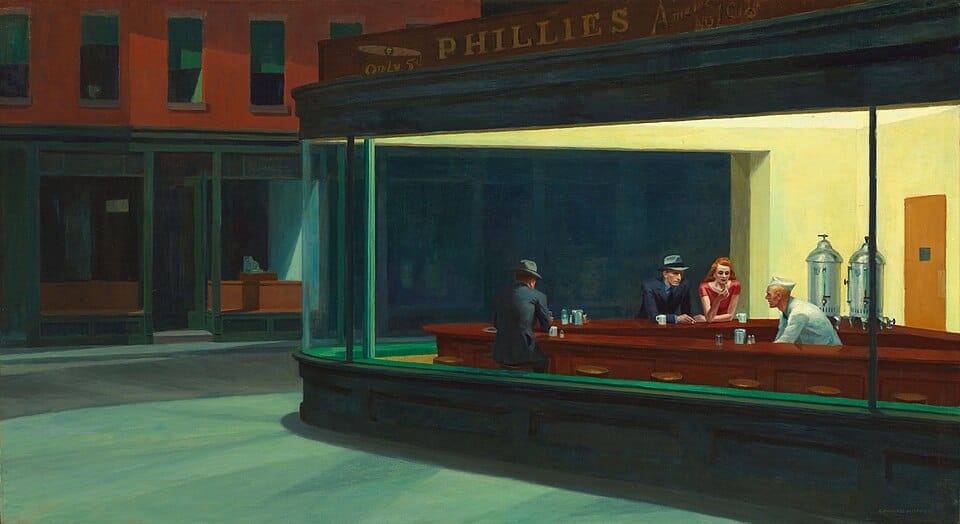
A diner glows in the dark. The people are together, but not quite connected. Whatever brought them there is over, and now they sit in the after-hours silence.
TODAY’S ANCHOR
Peace: Take a 15 minute mindfulness walk. Gently return to the present moment without judgment.
Stability: Rebuild baseline before chasing the next thing. Water. Real food. Sunlight. Movement. Sleep.
Expression: Preserve the good instead of trying to repeat it. Write down three memories from yesterday you want to keep. Send one message to someone who made it better. Draw an image from your mind. Turn the memory into gratitude, not hunger.
REFLECTION
What does the ache after joy teach me about what I love?
WILDCARD
Plan one small ordinary joy for today: an adventure, a movie, a meal. Not to replace the fireworks, but to remind yourself that life can still glow without exploding.